HomeApplicationsFood packaging

Food packaging

Banding is sustainable packaging in the food industry: bundling, labeling and premium labeling.

Banding is flexible, minimizes food packaging and reduces energy consumption along the entire value chain. Bands securely hold all types of food together, enhance product presentation, carry information and optimize processes. 

Minimize packaging
Minimize packaging
Food labeling
Food labeling
Replace plastic with paper
Avoid waste
Avoid waste
Reduce energy costs
Reduce energy costs

For which products would you like to optimize your packaging?

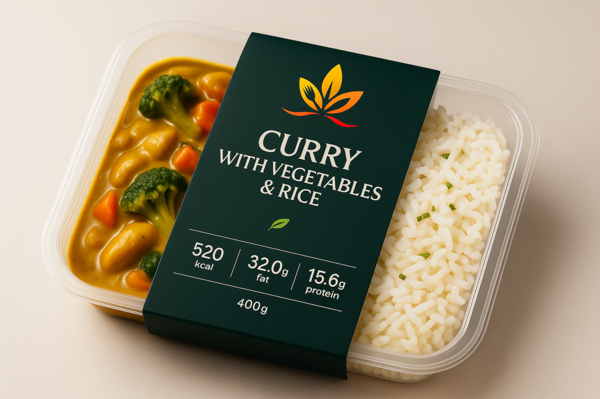
Ready meals and bowls

Banding solutions for sealing and labeling ready meals and bowls

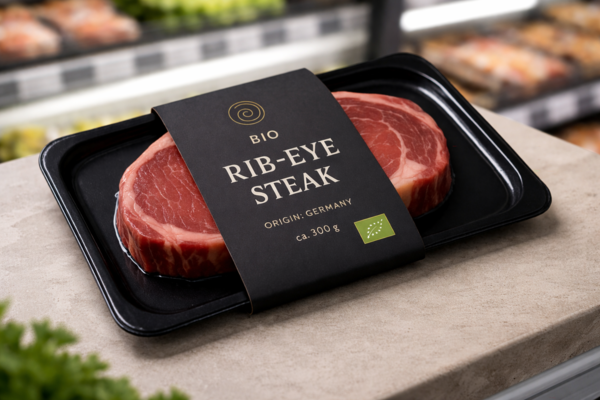
Meat and sausage products

Banding solutions for bundling and labeling meat and sausage products

Patisserie and baked goods

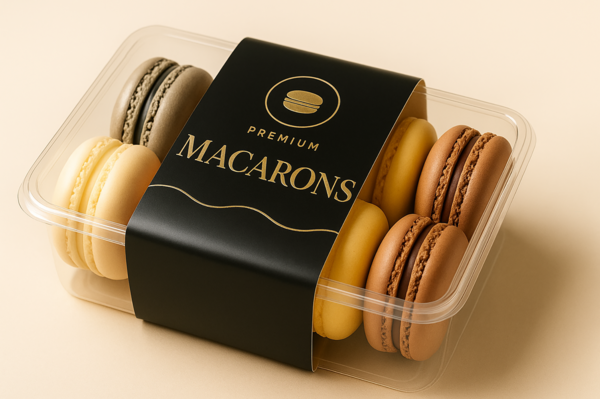
Banding solutions for bundling and labeling patisserie and baked goods

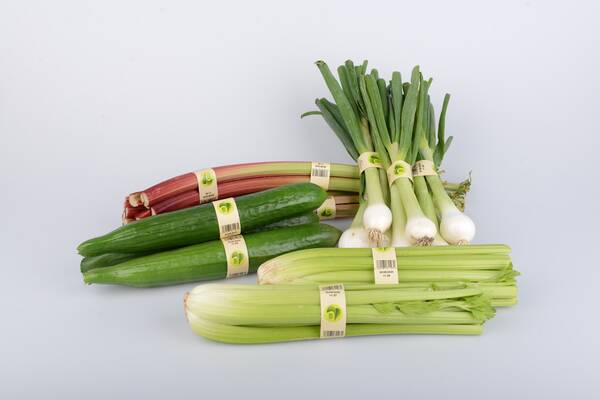
Fruit and vegetables

Banding solutions for bundling and labeling fruit and vegetables

Banding ready meals and bowls

Banding is branding, labeling and tamper proofing

Whether suhshi or bento boxes, snack, salad or meal trays, disposable or reusable bowls: adhesive-free banding is the optimal solution for branding, labeling and tamper evidence. The optionally pre-printed, 15 to 100 mm wide paper sleeves can be precisely and fully automatically printed with variable information such as product name, production and best-before dates, 1D or 2D codes or ingredient lists during the banding process.

Bands instead of carton sleeves 

Unlike rigid carton sleeves, the band is applied and sealed around the product during the packaging process. Whether set to a fixed length or adjusted flexibly to the product circumference, this method adapts dynamically to any food packaging format. Adjustable band tension secures the product firmly without adhesives. Replacing sleeves with bands saves material and optimizes your process chain. 


Banding meat and sausage products

Secure packaging and labeling 

With meat and sausage products, the band acts as both full-value packaging and information carrier. Instead of applying separate labels, bands up to 100 mm wide provide space for complete product declarations. They can be printed on both sides in up to 12 colors. 
Variable data such as best-before dates, barcodes or ingredient lists are applied just-in-time during packaging. Continuously adjustable tension secures the product mechanically, without adhesives or additional materials. 

Consumer-friendly multipacks

A band is frustration-free packaging. The infinitely adjustable sealing force ensures the right mix of easy tearing and security. Consumers benefit from the simplest possible product handling: there is no need to laboriously cut open films, simply open by hand. No further waste separation is necessary: the bands can simply be recycled via the correct cycle - paper or mono plastic, depending on the band type.

Simplifying logistics and reducing waste 

Paper bands replace plastic bags, tubular and shrink films when bundling products. Where required, thin recyclable film bands also provide stable transport security. This significantly reduces packaging waste from production to the point of sale. 
For store personnel, bands can be removed by hand without tools. This eliminates the need for sharp objects and reduces the risk of injury. 

Banding patisserie and baked goods

Branding, labeling and tamper protection

Delicate products such as cakes, pralines or cookies require gentle fixation. The adhesive-free band securely encloses cartons or trays without exerting pressure thanks to finely adjustable tension. 
High-quality bands up to 100 mm wide serve as freshness seals and information carriers at the same time. Variable data such as product name, best-before date or barcodes are printed directly during the process, eliminating the need for separate labels. 

Banding fruit and vegetables

Replacing packaging and adhesive labels 

For fruit and vegetables, bands replace bulky trays, shrink films or nets. Depending on product requirements, paper or thin recyclable mono-film is used. Both options reduce material use to the functional minimum. 
Bands bundle products such as asparagus, bananas or apples directly into retail units. Ultrasonic sealing ensures that neither adhesives nor heat come into contact with delicate surfaces. The band also carries the complete labeling, eliminating additional adhesive labels. 
For consumers, disposal is simple: paper or plastic materials are easily separated and fed into the appropriate recycling stream. 

Sealing cardboard trays 

Paper bands reliably secure fruit and vegetables in open tray packaging. They replace plastic lids or films and create a stable transport unit. Adjustable tension prevents products such as apples, avocados or tomatoes from colliding, effectively avoiding damage. 
At the same time, the band serves as a prominent branding and information carrier. This type of packaging combines optimal product protection with high automation and enables mono-material recycling in the paper stream. 

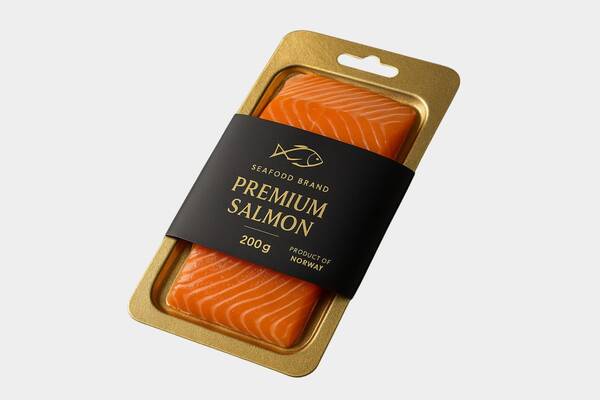
Banding seafood

Bands reduce packaging material for seafood  

When packaging seafood such as shrimp, mussels, fish fillets or mixed products in trays, bands ensure secure fixation with minimal material use. Instead of additional outer packaging or large adhesive labels, the band gently and reliably holds the products in place without damaging them. 
Bands allow sensitive seafood products to be securely bundled or trays to be safely sealed within the process. The flexible band tension keeps the goods stable without causing pressure marks. Especially with moist or chilled seafood, bands demonstrate their strengths as a safe and material-efficient packaging solution. 
Seafood bands also provide complete product labeling. Information such as origin, catch area, weight, shelf life or brand is clearly visible on the band, replacing additional adhesive labels. The result is a clean, high-quality product presentation at the point of sale. 

Advantages of bands in food packaging 

Banding can reduce packaging material by up to 70%. It secures products safely without damage. Ultrasonic sealing eliminates adhesives completely, preventing chemical residues and enabling mono-material recycling. 


Advantages compared to traditional carton sleeves: 

  • Replaces additional labels through just-in-time printing
  • No heat generation thanks to ultrasonic sealing
  • Easy recycling and reduced packaging volume
  • High productivity through automation
  • Clear product visibility for maximum transparency
  • Processing of various band materials on the same machine 


Frequently Asked Questions About Food Packaging 


Bands are suitable for a wide range of products – from bakery goods and seafood to meat and fresh produce such as asparagus or bananas. Both delicate fresh goods and processed foods can be bundled or securely sealed in a material-efficient way. 
Banding secures single items as well as multipacks and seals primary packaging such as ready-meal trays, sushi boxes or meat trays with tamper evidence, without applying heat to chilled products. 

The band can fully replace traditional labels. It offers space for branding, EAN/QR codes, nutritional tables and origin information. Variable data such as best-before dates or batch numbers are printed dynamically just-in-time during the packaging process. 

Yes. Special papers and films are moisture-resistant and tear-proof. Ultrasonic sealing is purely mechanical, ensuring stable closure even at low temperatures or in cold-chain conditions. 

ATS-Tanner uses certified materials approved for direct food contact (low migration). Both carrier materials (paper/film) and printing inks comply with current food safety standards. 

The machines are modular and integrate seamlessly into existing filling and packaging lines. Digital interfaces enable synchronization with upstream and downstream systems. 

In many cases, yes. For fruit, vegetables and multipacks, paper bands can replace plastic film entirely. For meat or ready meals, they significantly reduce plastic by replacing heavy lids or sleeves with a minimal material layer. 

News and applications about food packaging